Works of Ancient Greece
Celebrating the art, stories, and enduring legacy of the ancient world.

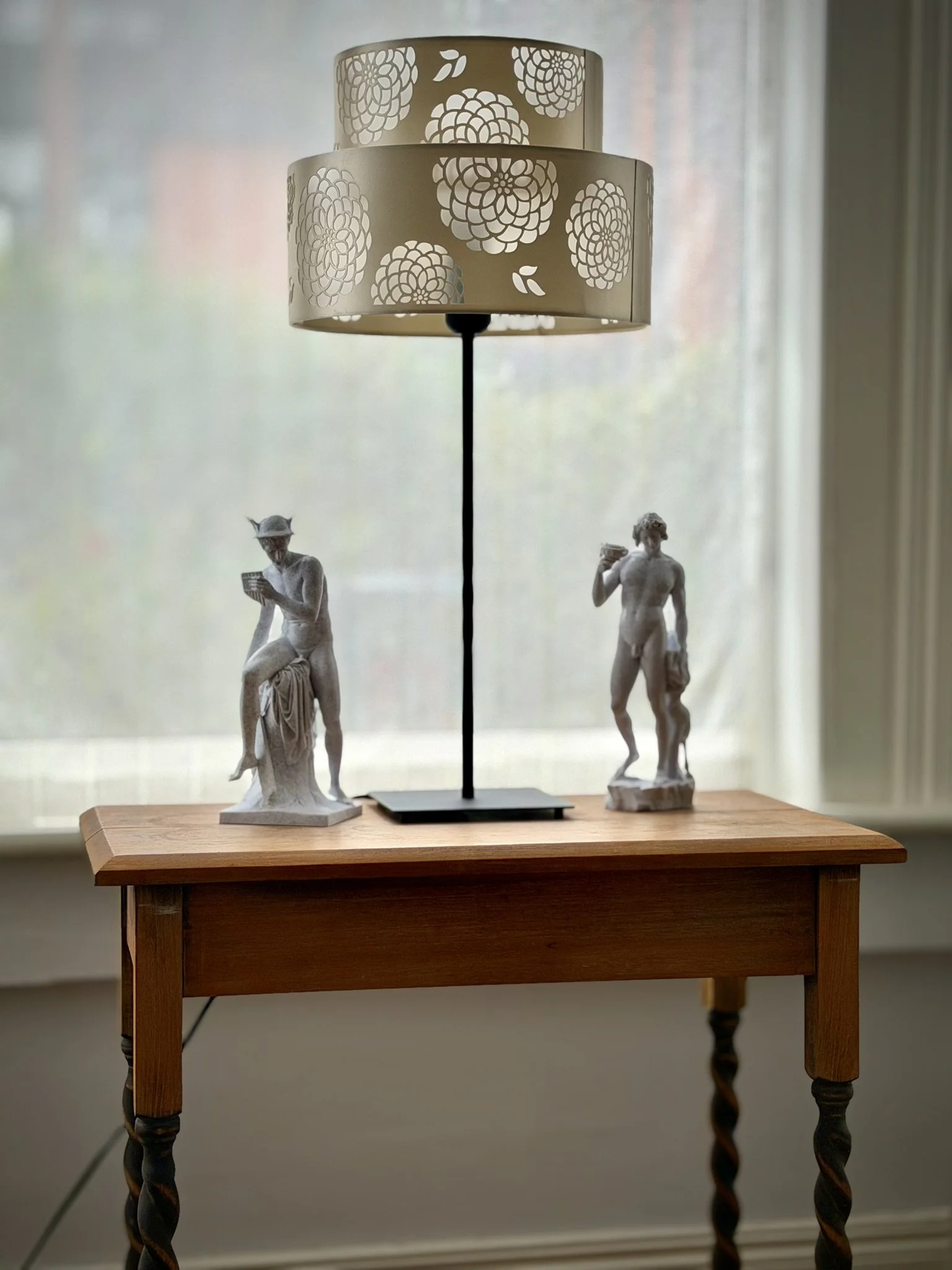
The history of these sculptures didn't end when they were first carved. From Roman copies of lost Greek originals to later Renaissance and Neoclassical interpretations, each piece is presented alongside the story of the artwork and the myths it represents.

Aphrodite
Goddess of Love, Beauty and Desire
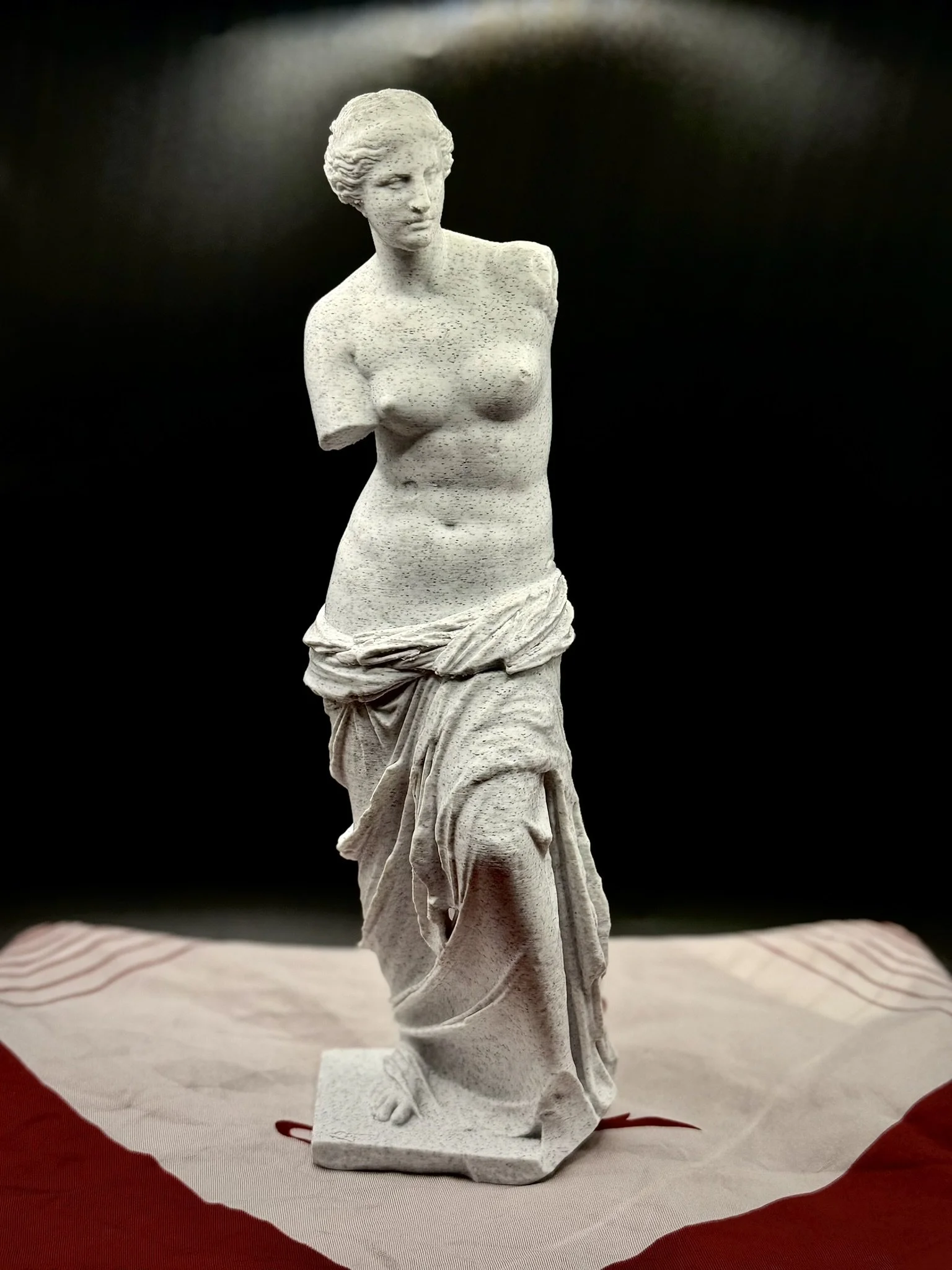
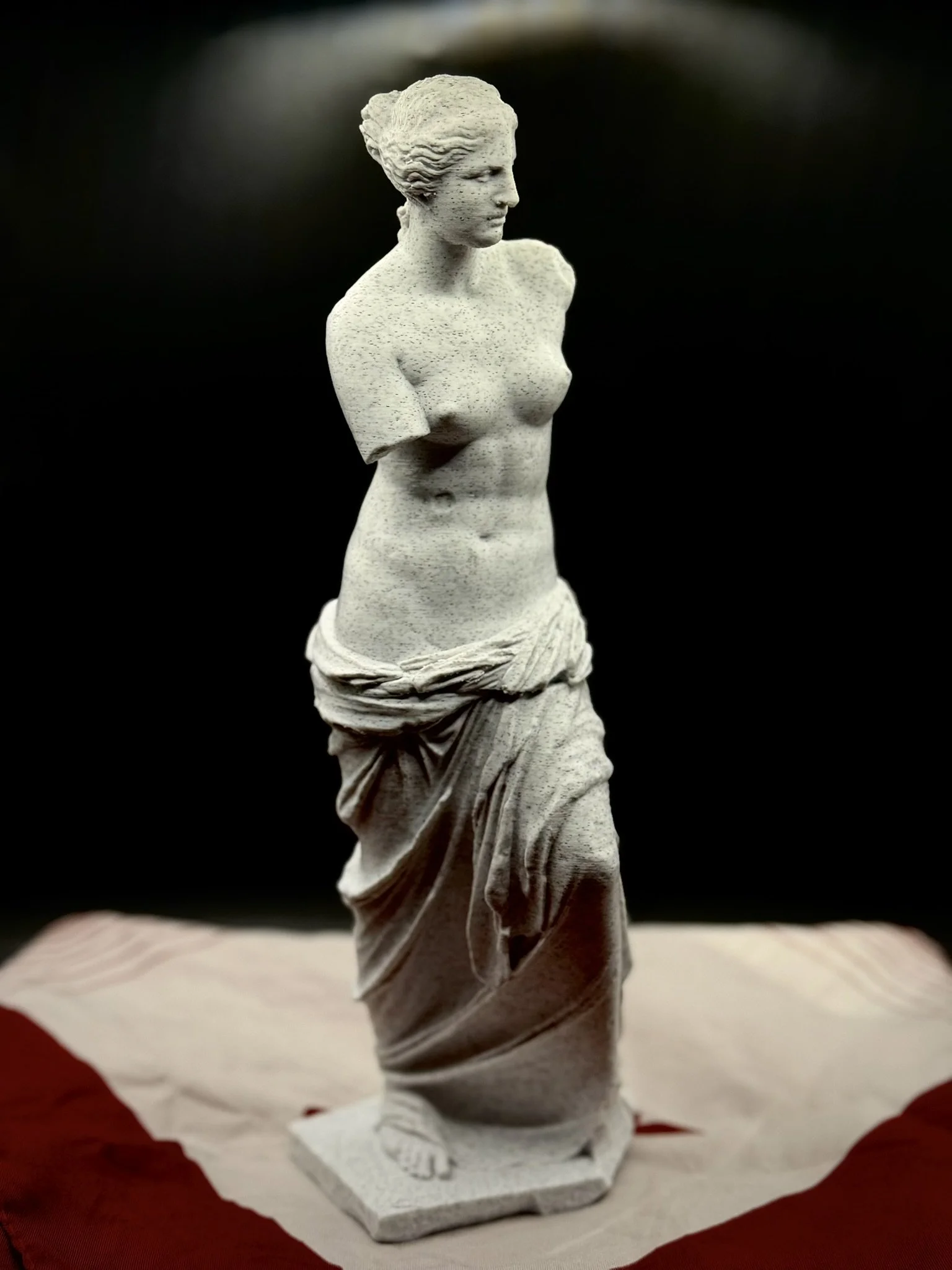
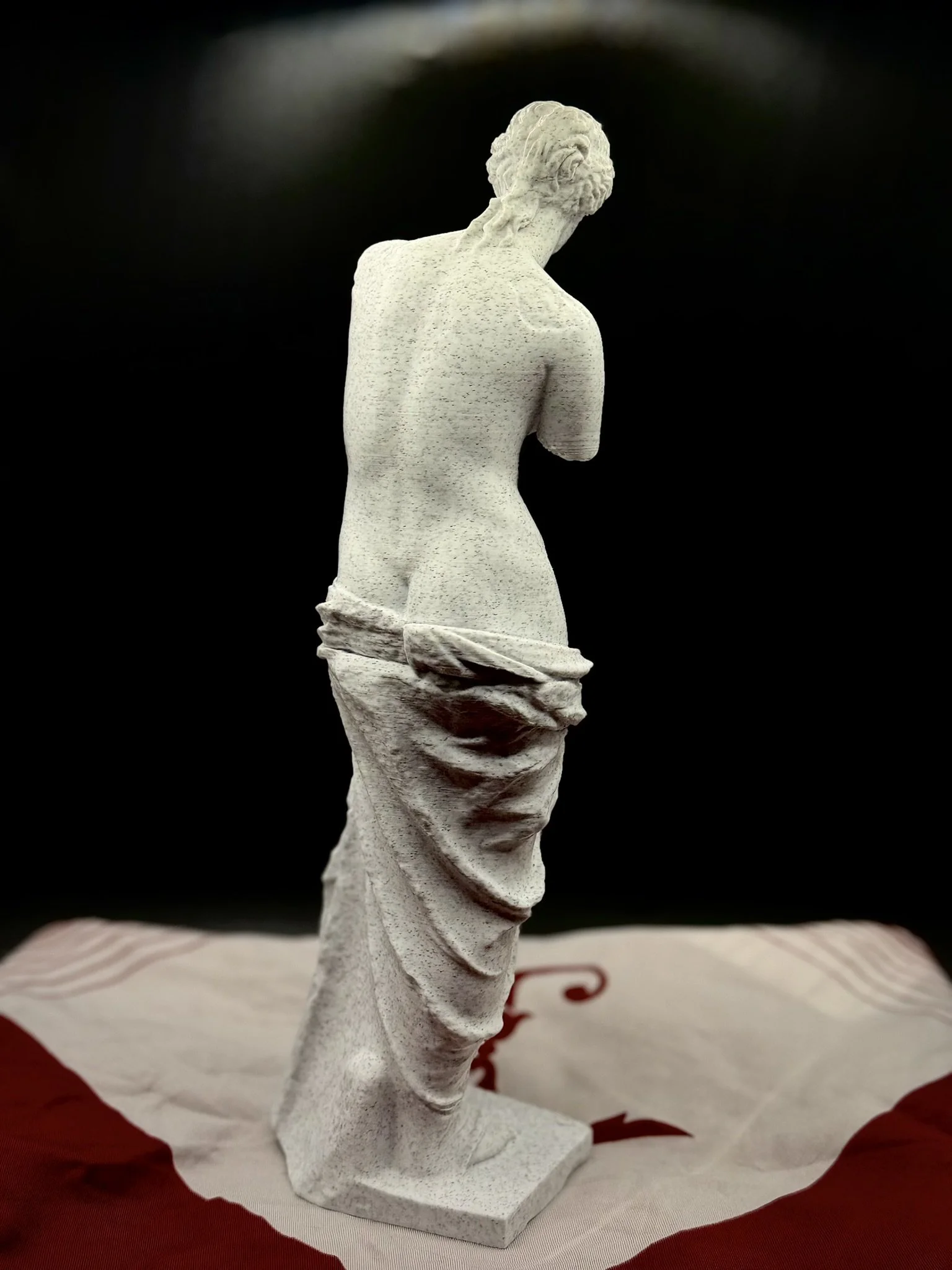
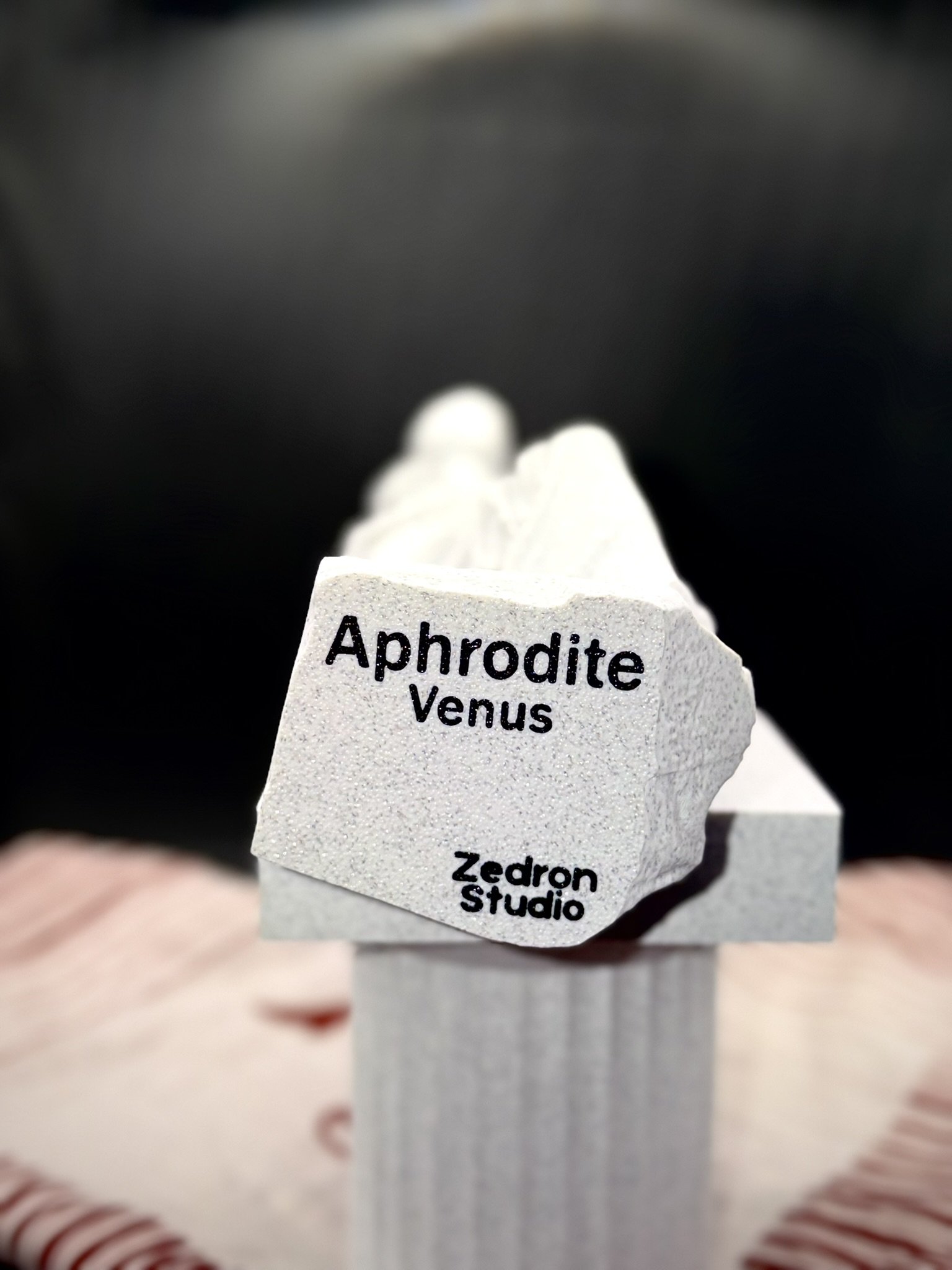
Original Sculpture: Venus de Milo
Period: Hellenistic Greece (c. 150-100 BCE)
Roman Counterpart: Venus
The Venus de Milo is one of the most celebrated sculptures to survive from the Hellenistic period. Believed to represent Aphrodite, the Greek goddess of love, beauty and desire, the marble original was discovered on the island of Milos in 1820 and has since become one of the defining works of classical sculpture.
Known as Venus in Roman mythology, Aphrodite embodies love, beauty, attraction and creative inspiration. According to Greek tradition, she was born from the sea and appears throughout classical mythology, including the Judgement of Paris, the story of Aeneas and the tale of Pygmalion. Across more than two millennia of art and literature, she has remained an enduring symbol of grace, harmony and the power of human connection.
Apollo
God of Light, Music, Healing and Prophecy
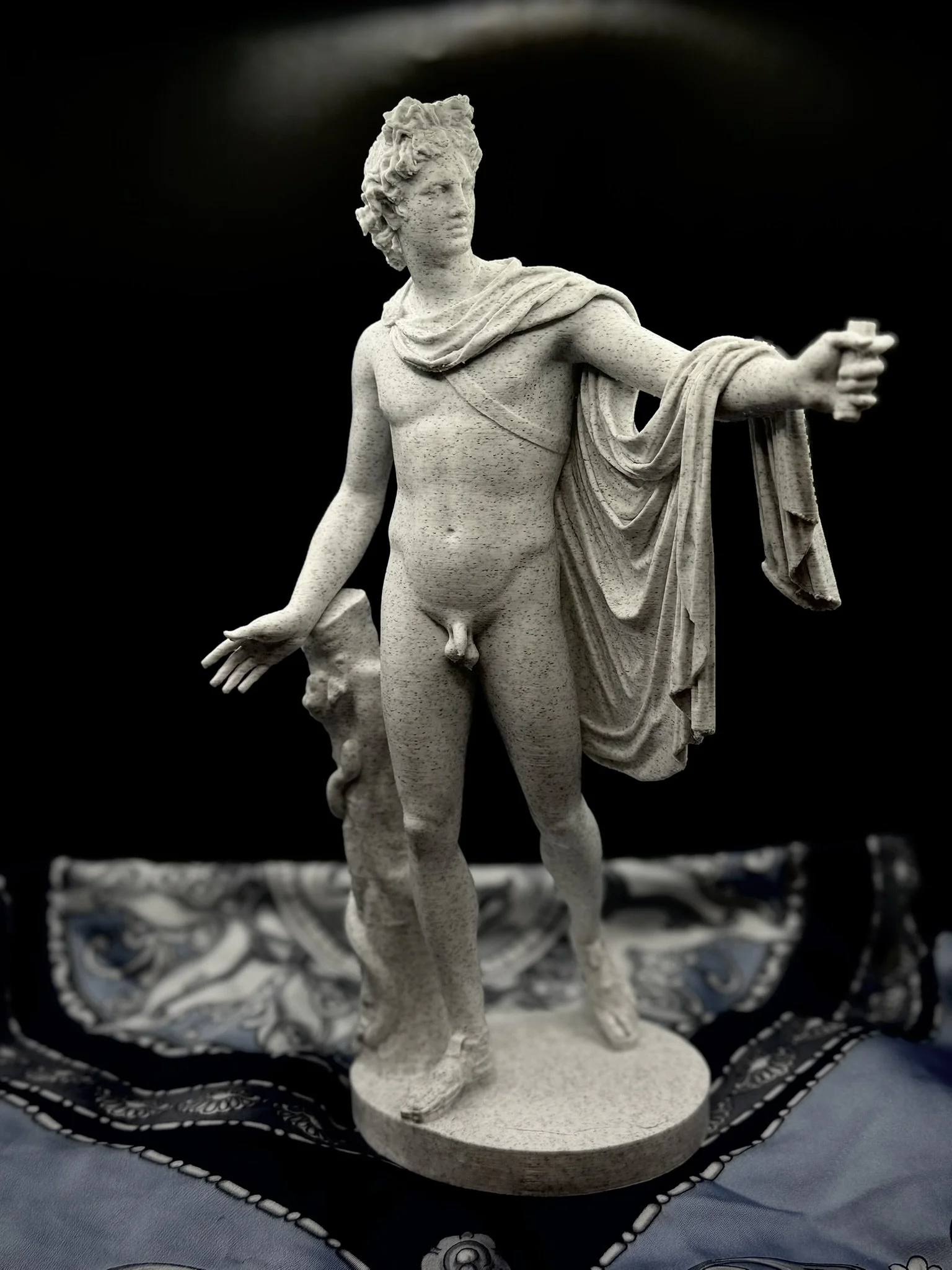
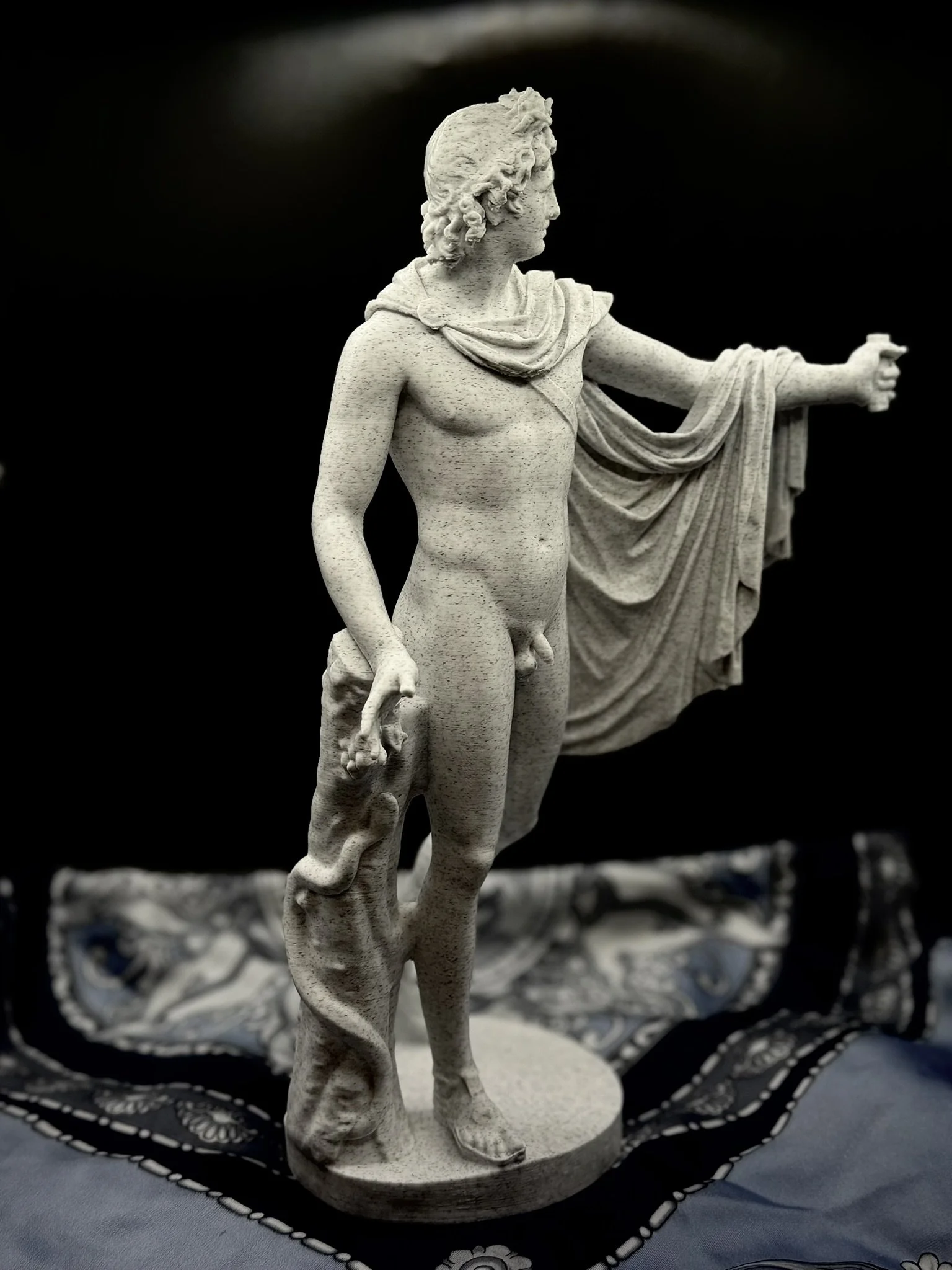
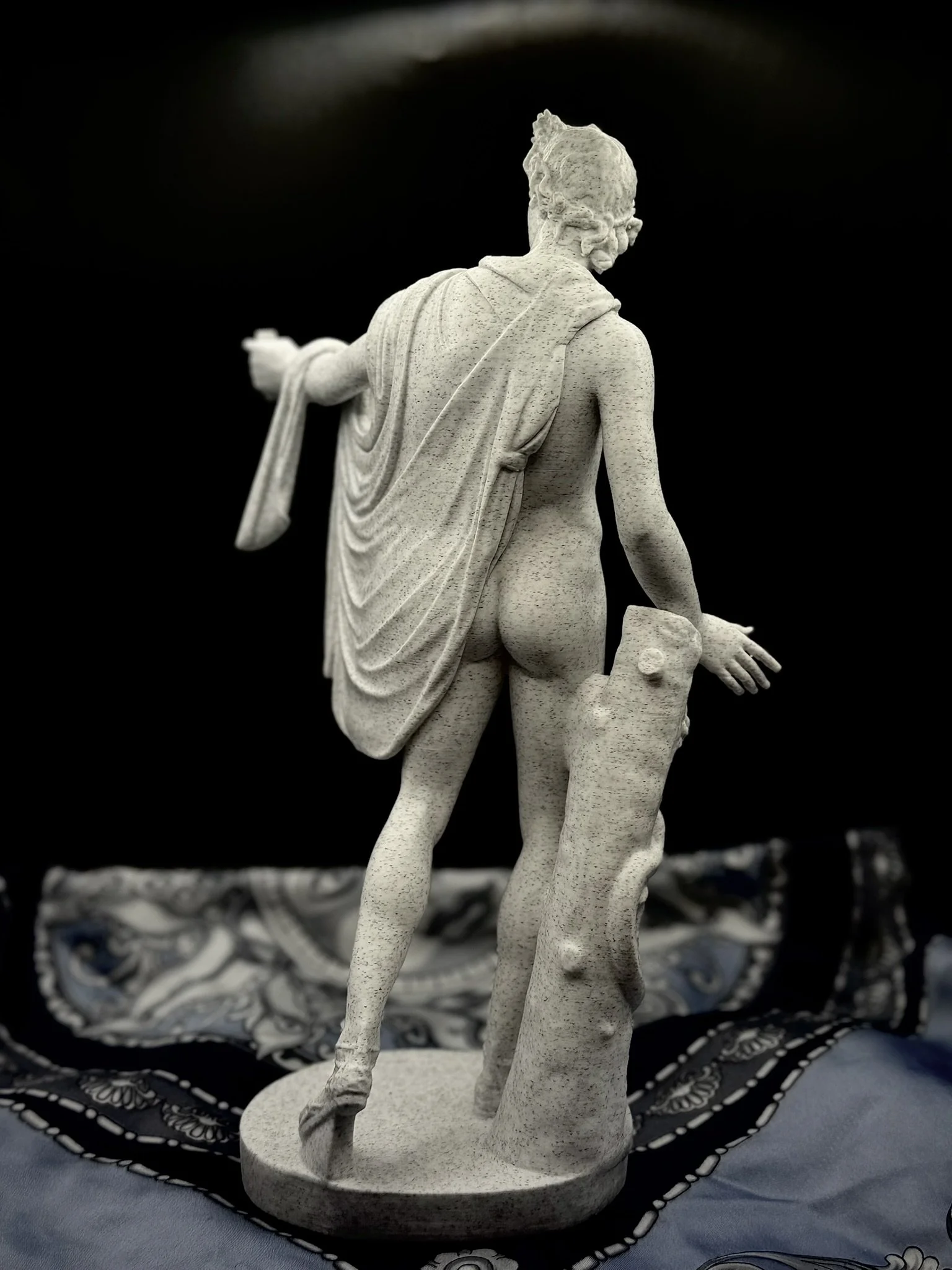
Original Sculpture: Apollo Belvedere
Period: Roman marble copy after a Greek original (attributed to Leochares, c. 330-320 BCE)
Roman Counterpart: Apollo
The Apollo Belvedere is one of the most celebrated sculptures of the ancient world and has long been regarded as an ideal of classical beauty. Attributed to the Greek sculptor Leochares and preserved through Roman marble copies, the statue achieved particular acclaim during the Renaissance, when it became one of the most admired works of antiquity and a defining example of classical sculpture.
Apollo is unique among the Olympian gods in retaining the same name in both Greek and Roman mythology. He is the god of light, music, healing, prophecy and protection, and appears throughout Greek mythology in stories including the slaying of Python, the establishment of the sanctuary at Delphi and his close bond with his twin sister Artemis. Across more than two millennia of art and literature, Apollo has remained an enduring symbol of harmony, intellect and artistic excellence.
Dionysus
God of Wine, Celebration and Transformation
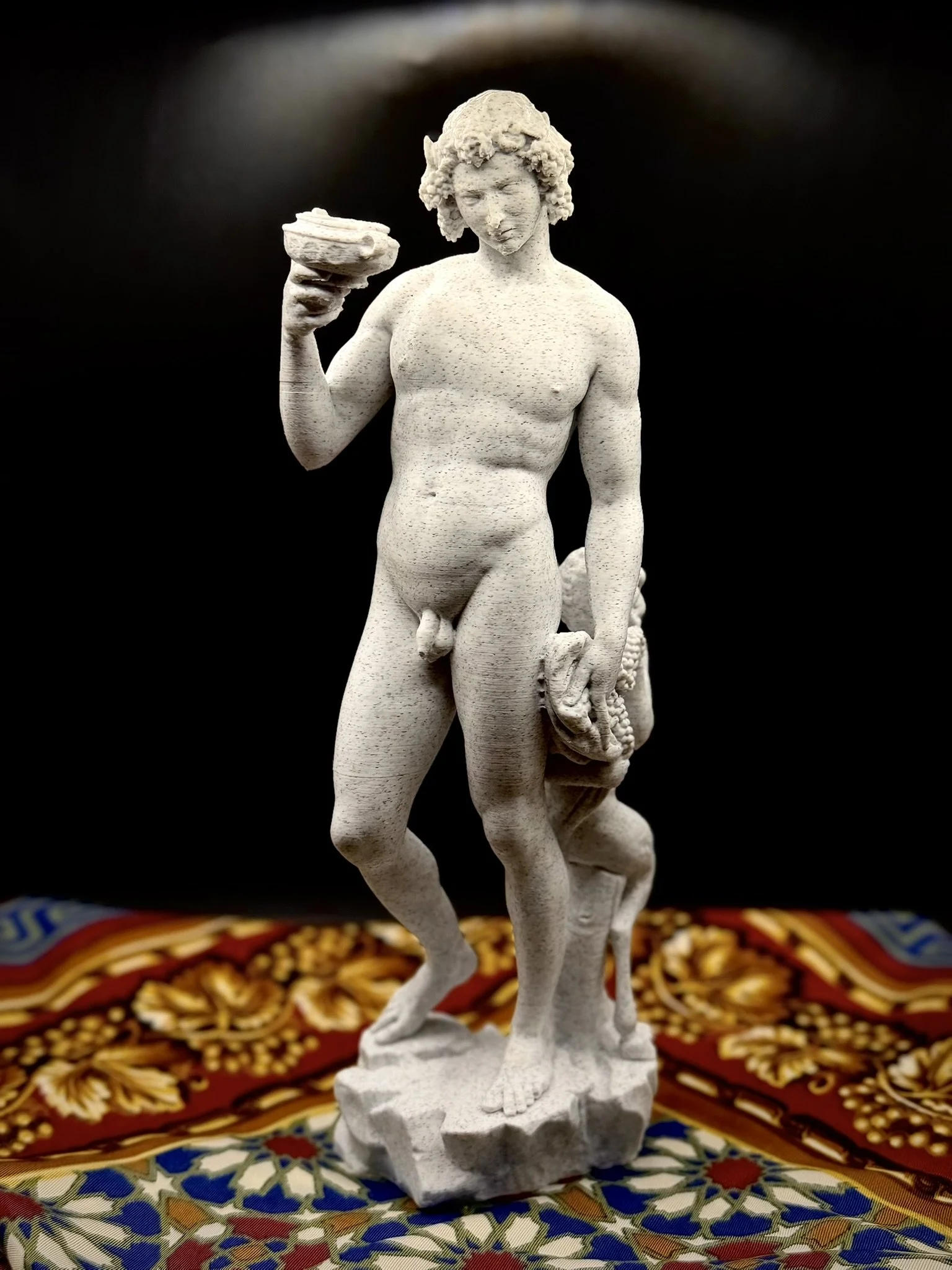
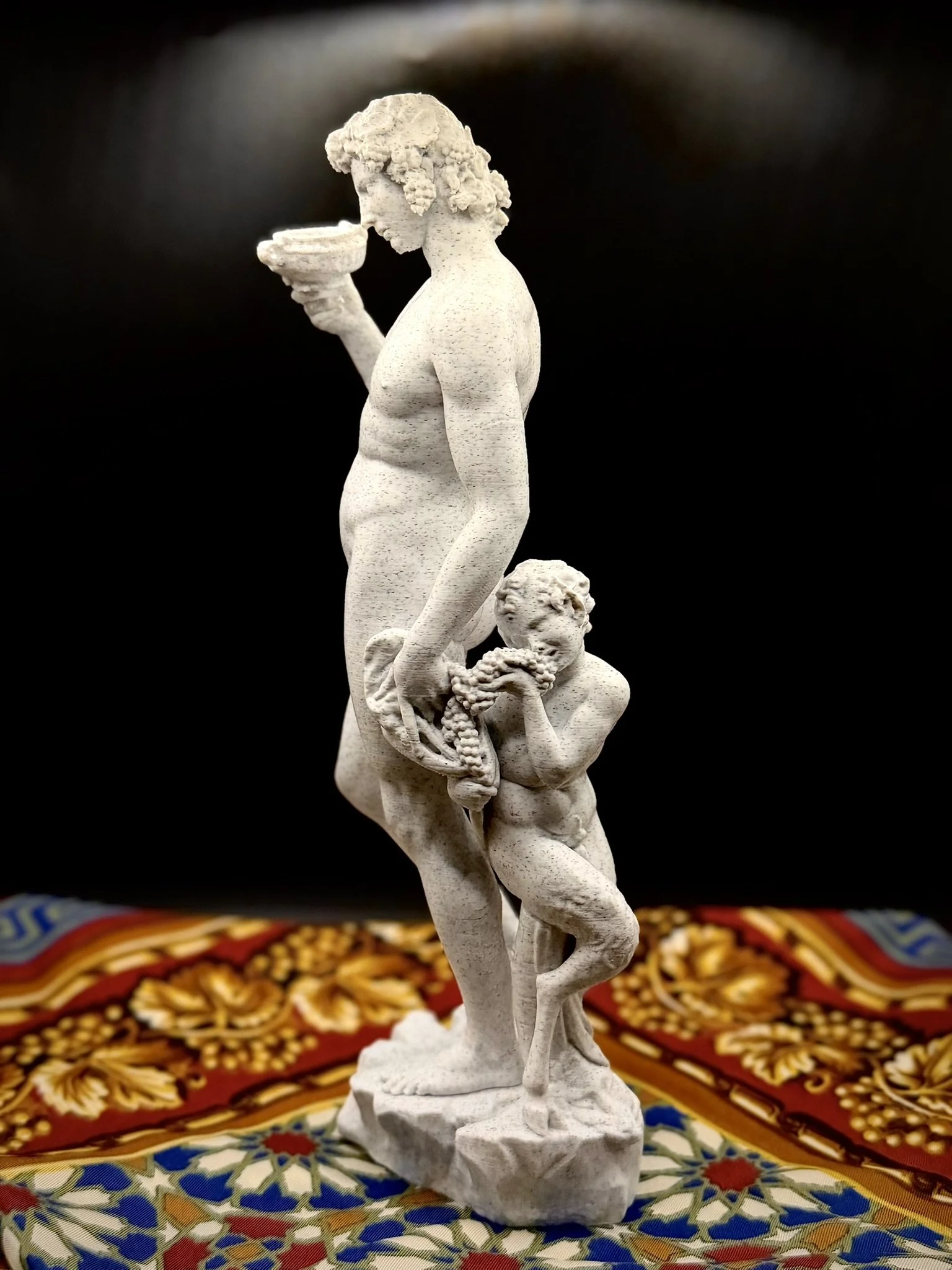
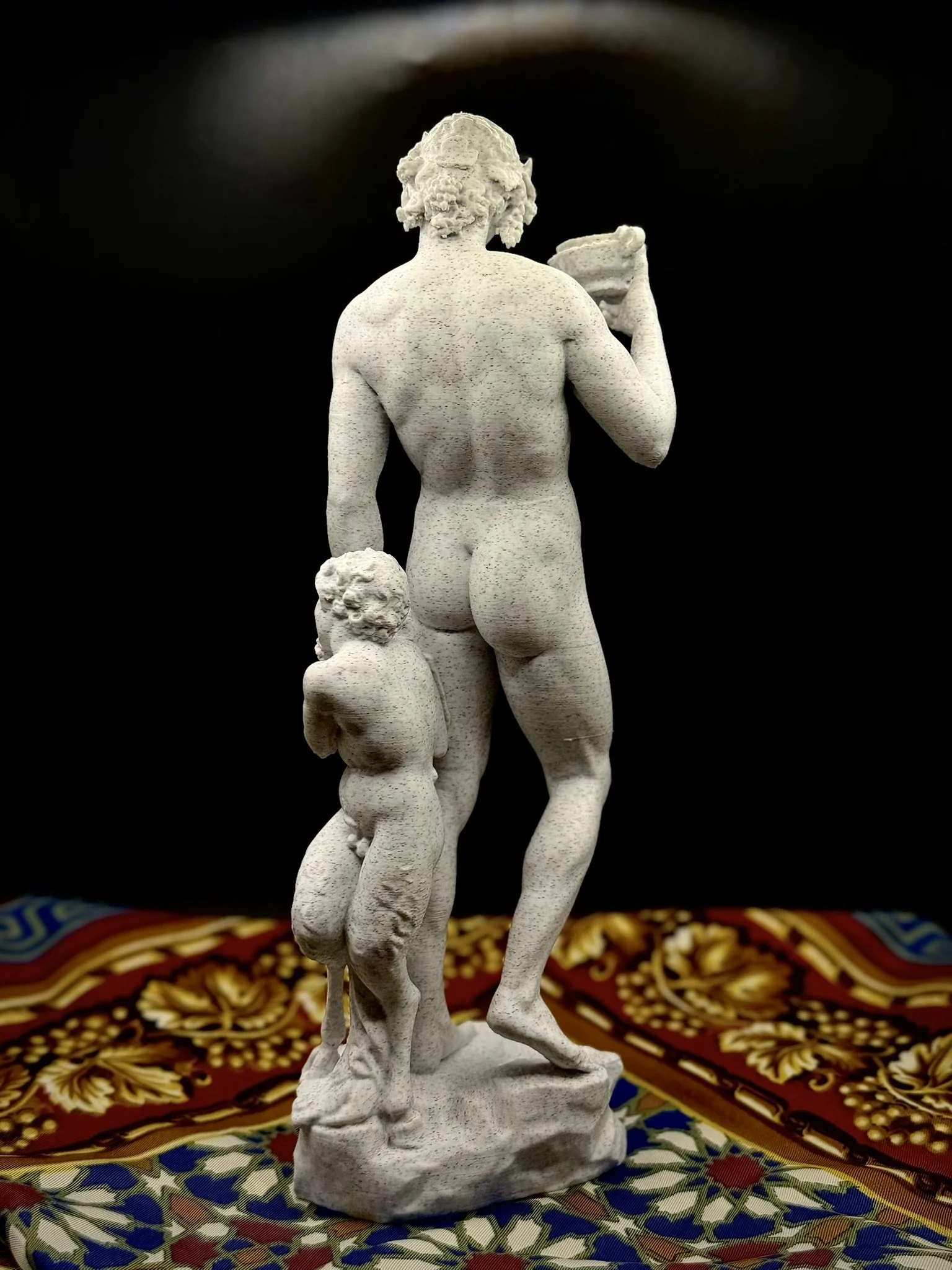
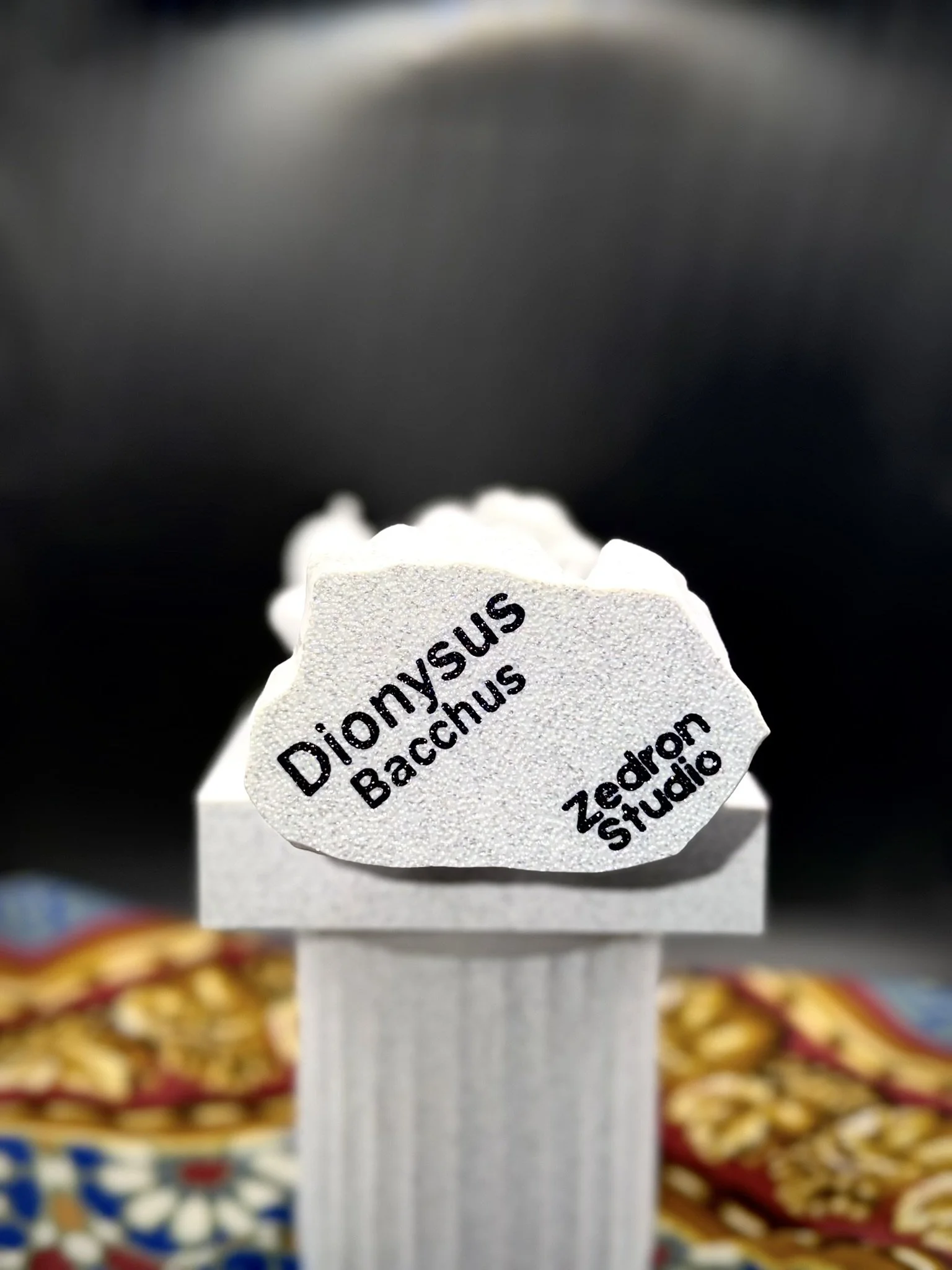
Original Sculpture: Bacchus
Artist: Michelangelo (1475-1564)
Period: Italian Renaissance, 1496-1497
Roman Counterpart: Bacchus
Michelangelo's Bacchus is one of the earliest major works of the Renaissance master, created shortly after his arrival in Rome at the age of twenty-one. Inspired by surviving classical sculpture, the work depicts the Roman god of wine in an unsteady, intoxicated pose, accompanied by a small faun feeding on a cluster of grapes. Its naturalistic movement and expressive character marked a striking departure from the idealized restraint often associated with classical statuary, making it one of the most celebrated Renaissance interpretations of an ancient deity.
Known as Bacchus in Roman mythology, Dionysus is the Greek god of wine, celebration, transformation and ecstatic freedom. He represents both joy and wildness, presiding over theatre, ritual, fertility and the dissolution of ordinary boundaries. Throughout Greek mythology he travels widely, teaching the cultivation of the vine, gathering followers and challenging kings who deny his divinity. Across centuries of art and literature, Dionysus has remained an enduring symbol of creativity, liberation and the richness of human experience.
Hekate
Goddess of Crossroads, Magic and Transformation
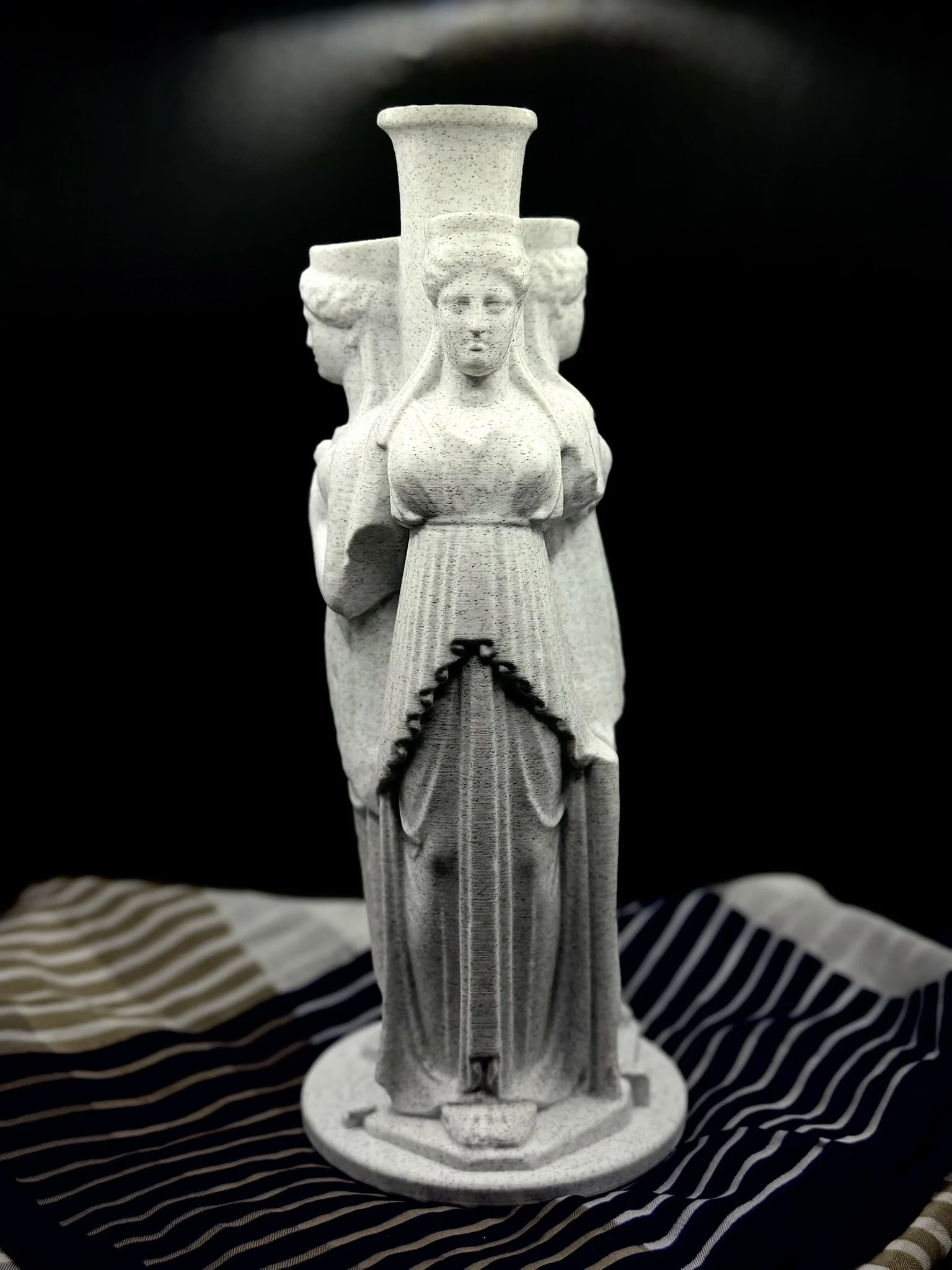
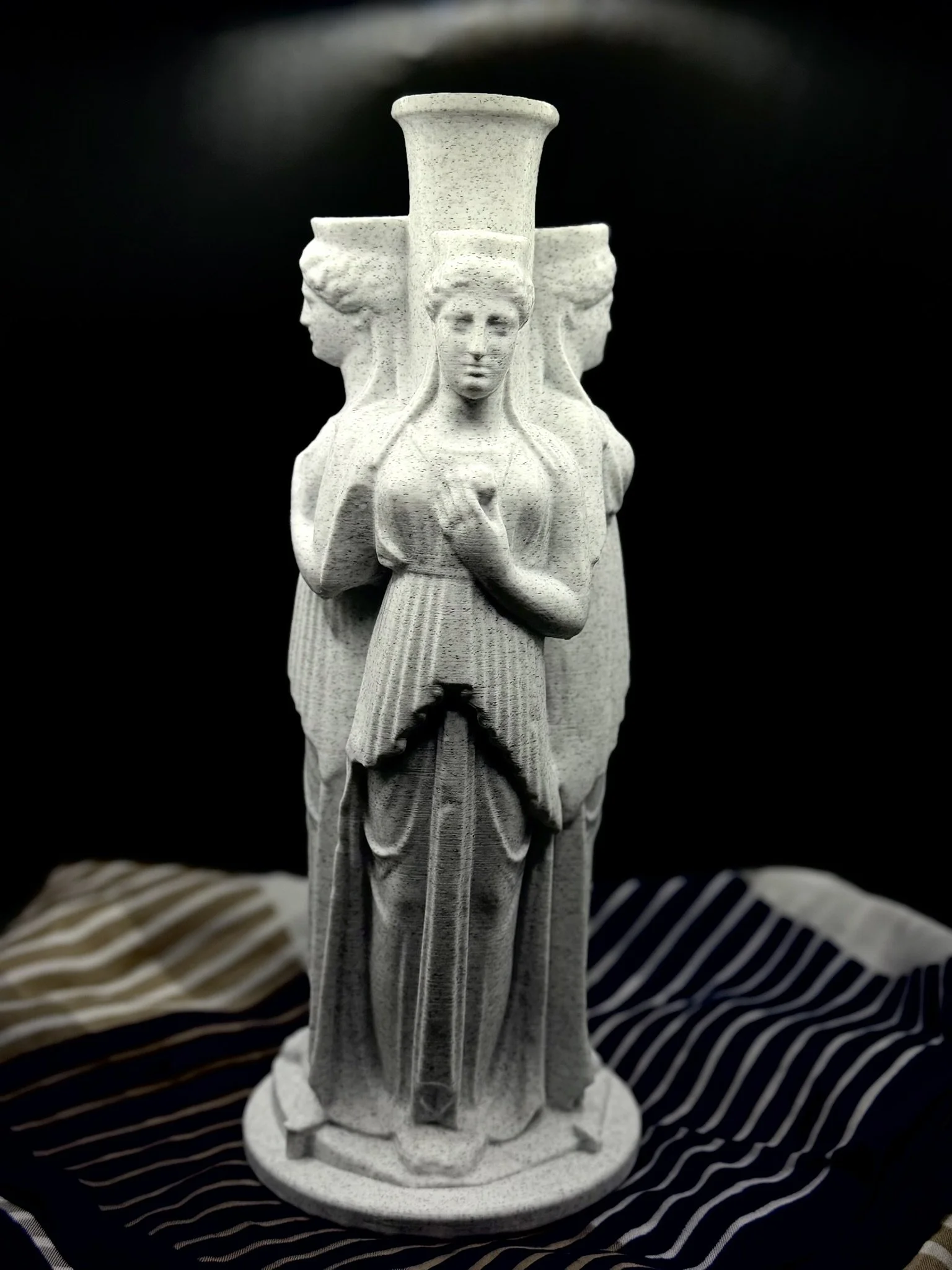
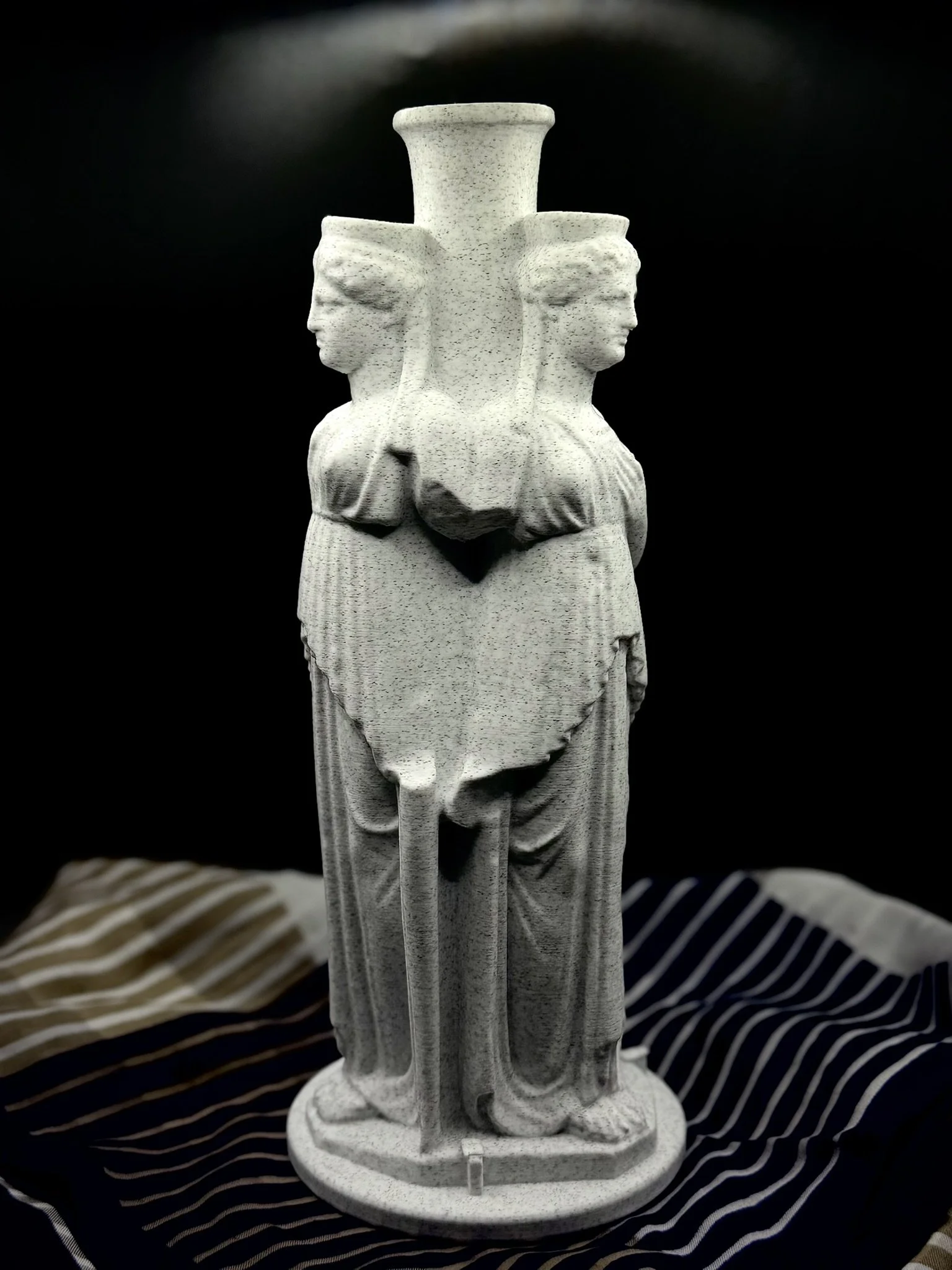

Original Sculpture: Hecate Epipyrgidia
Artist: Alcamenes (5th century BCE)
Period: Greek original, known through Roman marble copies (1st-2nd century CE)
Roman Counterpart: Trivia
The Hecate Epipyrgidia is the most influential sculptural representation of Hekate to survive from antiquity. Created by the Greek sculptor Alcamenes during the 5th century BCE, it depicts the goddess in her distinctive triple form, with each figure facing a different direction. Although the original bronze sculpture has been lost, its design survives through Roman marble copies, including the example preserved in the Rijksmuseum van Oudheden in Leiden. The composition became the defining image of Hekate throughout the classical world and has influenced artistic representations of the goddess for over two thousand years.
Known as Trivia in Roman mythology, Hekate is the Greek goddess of crossroads, boundaries, magic and transformation. Associated with liminal places and moments of transition, she is often portrayed as a guardian who watches in every direction, guiding travelers and protecting sacred thresholds. In Greek mythology she aids Demeter in the search for Persephone and becomes closely associated with the underworld, while later traditions honor her as a patron of witchcraft, intuition and hidden knowledge. Across centuries of mythology, religion and art, Hekate has remained an enduring symbol of guidance, protection and the mysteries that lie between worlds.
Hermes
Messenger of the Gods and God of Travel, Commerce and Trickery
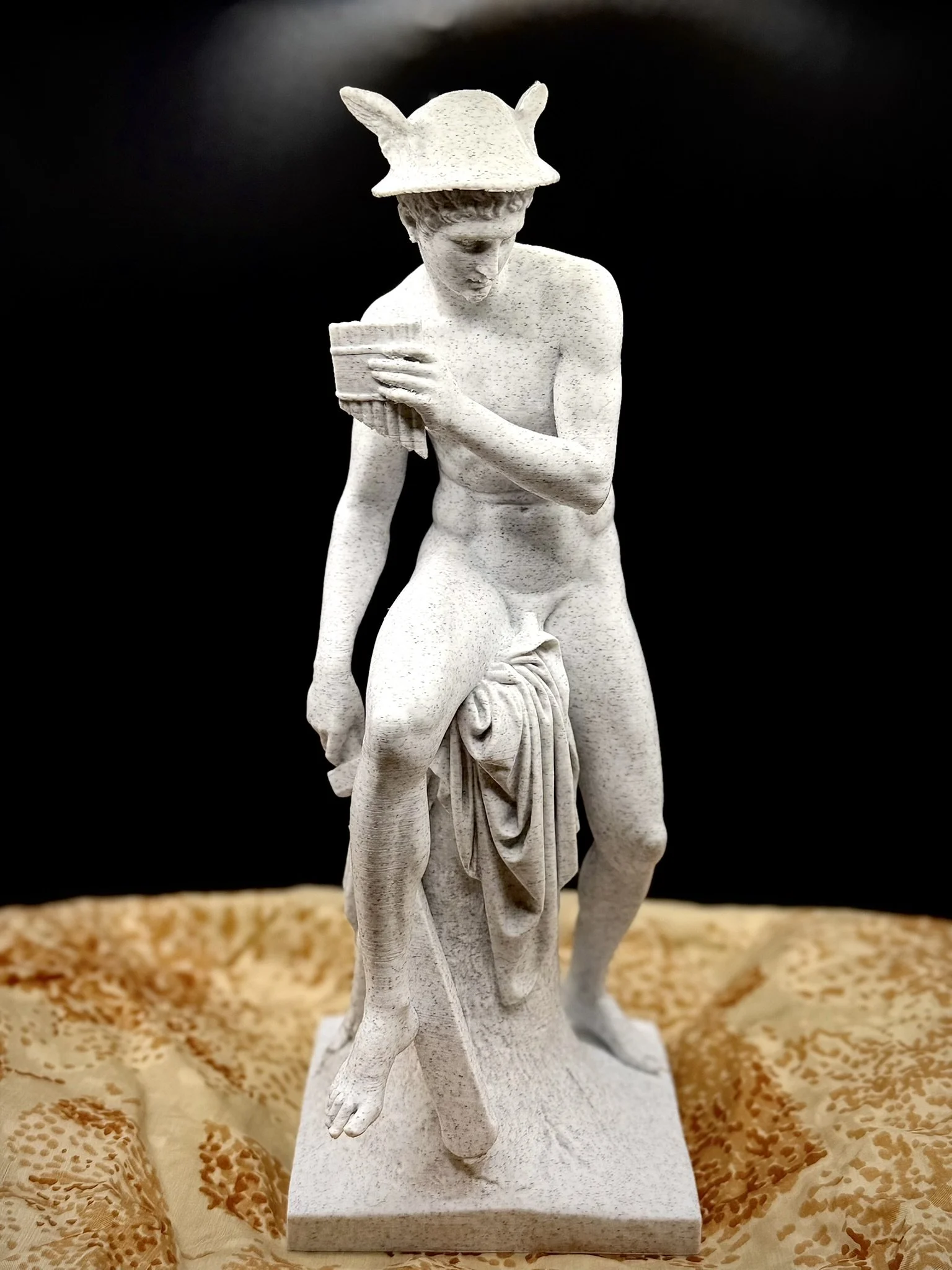
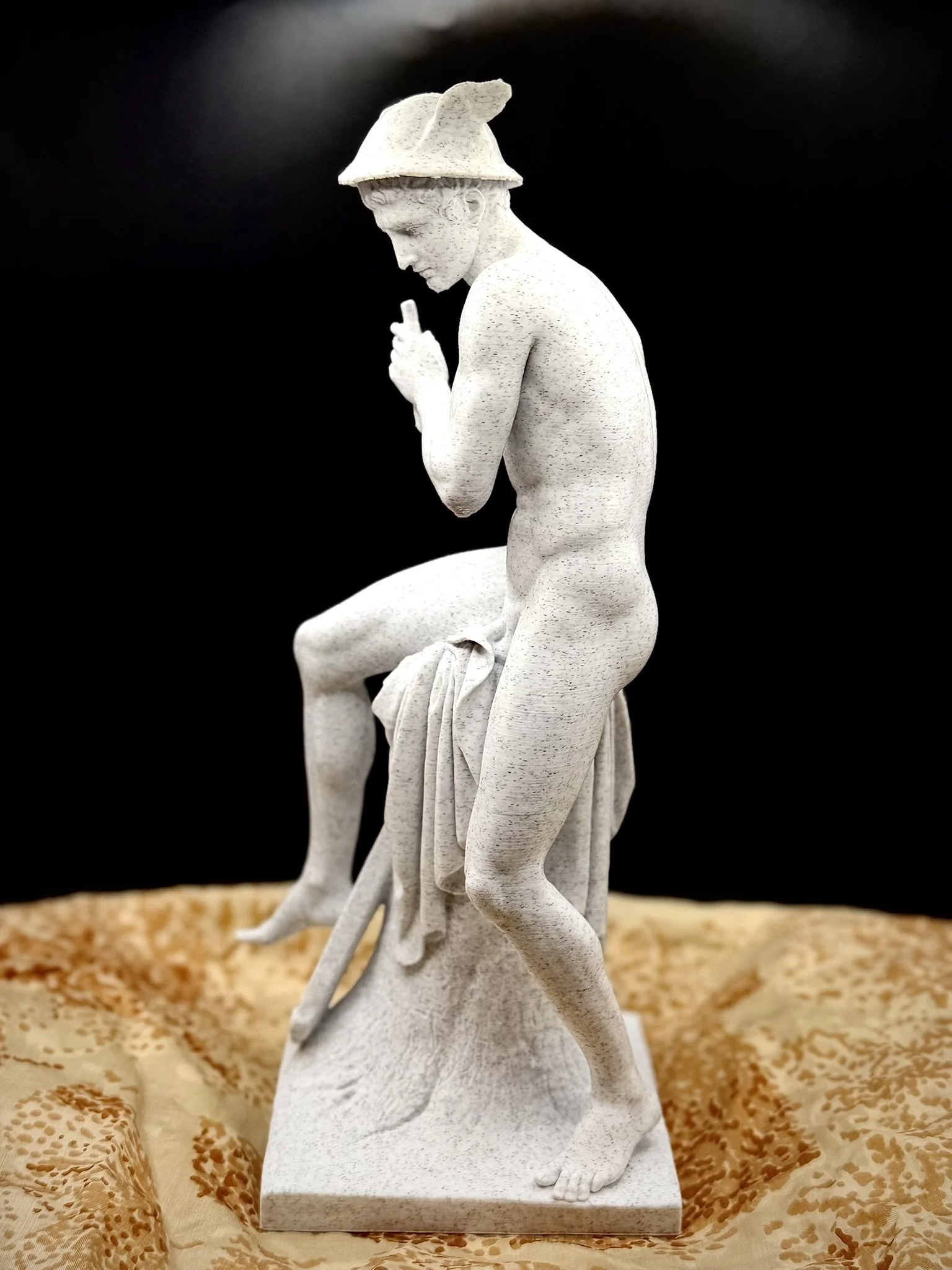
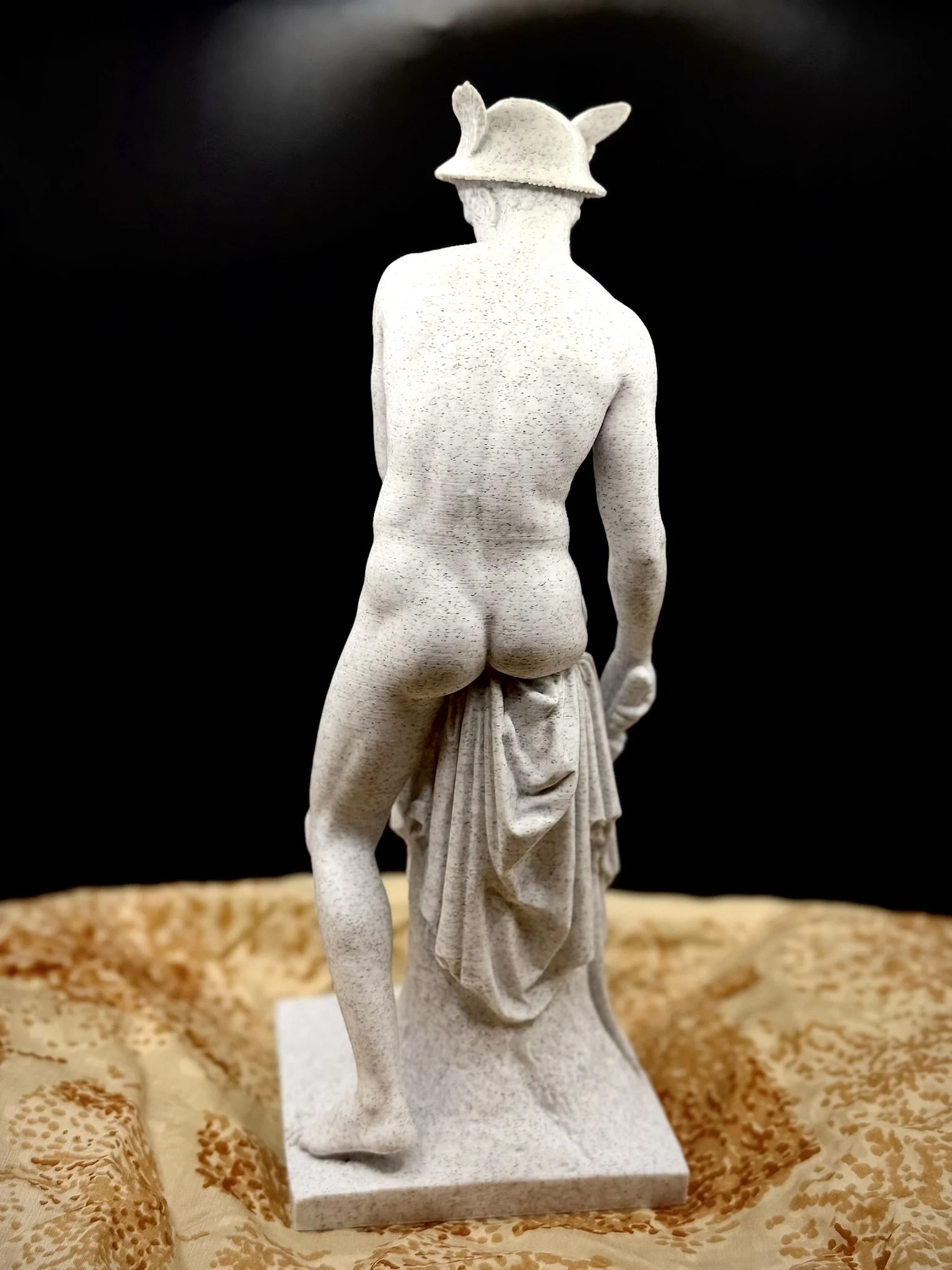
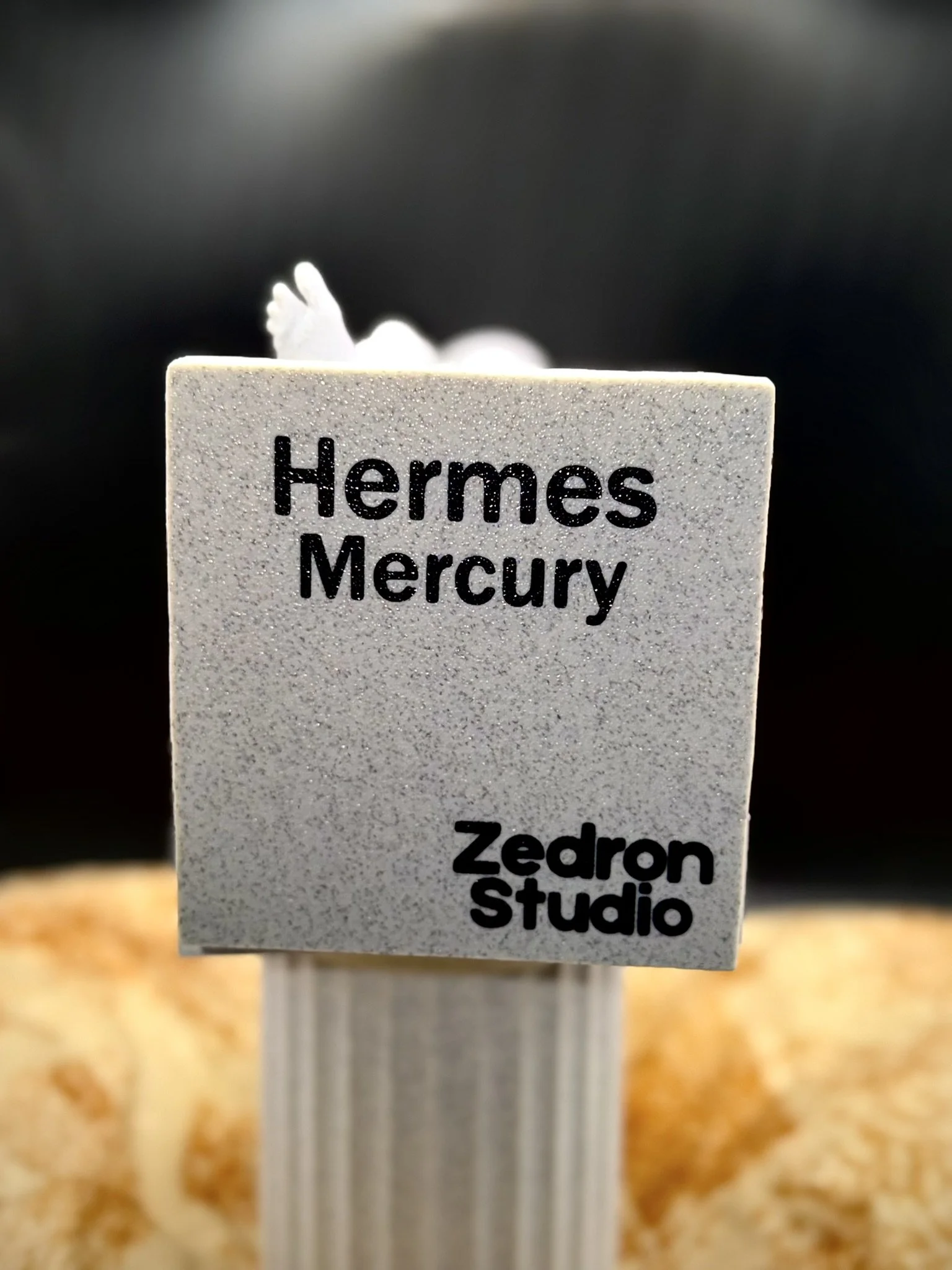
Original Sculpture: Mercury About to Kill Argus
Artist: Bertel Thorvaldsen (1770–1844)
Period: Danish Neoclassicism, 1818
Roman Counterpart: Mercury
Bertel Thorvaldsen's Mercury About to Kill Argus is one of the defining works of Neoclassical sculpture. Created in Rome during the early nineteenth century, it depicts the moment before Mercury strikes Argus, the hundred-eyed giant tasked with guarding Io. Rather than portraying dramatic action, Thorvaldsen captures a moment of quiet tension, reflecting the Neoclassical admiration for balance, restraint and idealised form. The sculpture remains one of the artist's best-known works and is represented in major museum collections throughout Europe.
Known as Mercury in Roman mythology, Hermes is the Greek messenger of the gods and the protector of travellers, merchants and boundaries. Associated with speed, wit and ingenuity, he serves as the divine herald, the guide of souls to the underworld and a trusted companion to heroes including Perseus, Odysseus and Heracles. Greek tradition also credits Hermes with inventing the lyre as an infant, demonstrating the intelligence and inventiveness that define his character. Across centuries of mythology, literature and art, Hermes has remained an enduring symbol of movement, communication and discovery.